A Bodywork Therapist Compared 5 Cellulite Devices. The Results Were Not Even Close.
After 19 years working on legs, Marco Rossi tested the five devices his clients ask about most, with 12 of them, for 8 weeks. Three of them she has probably already bought. One is the only one anyone was still using at the end.
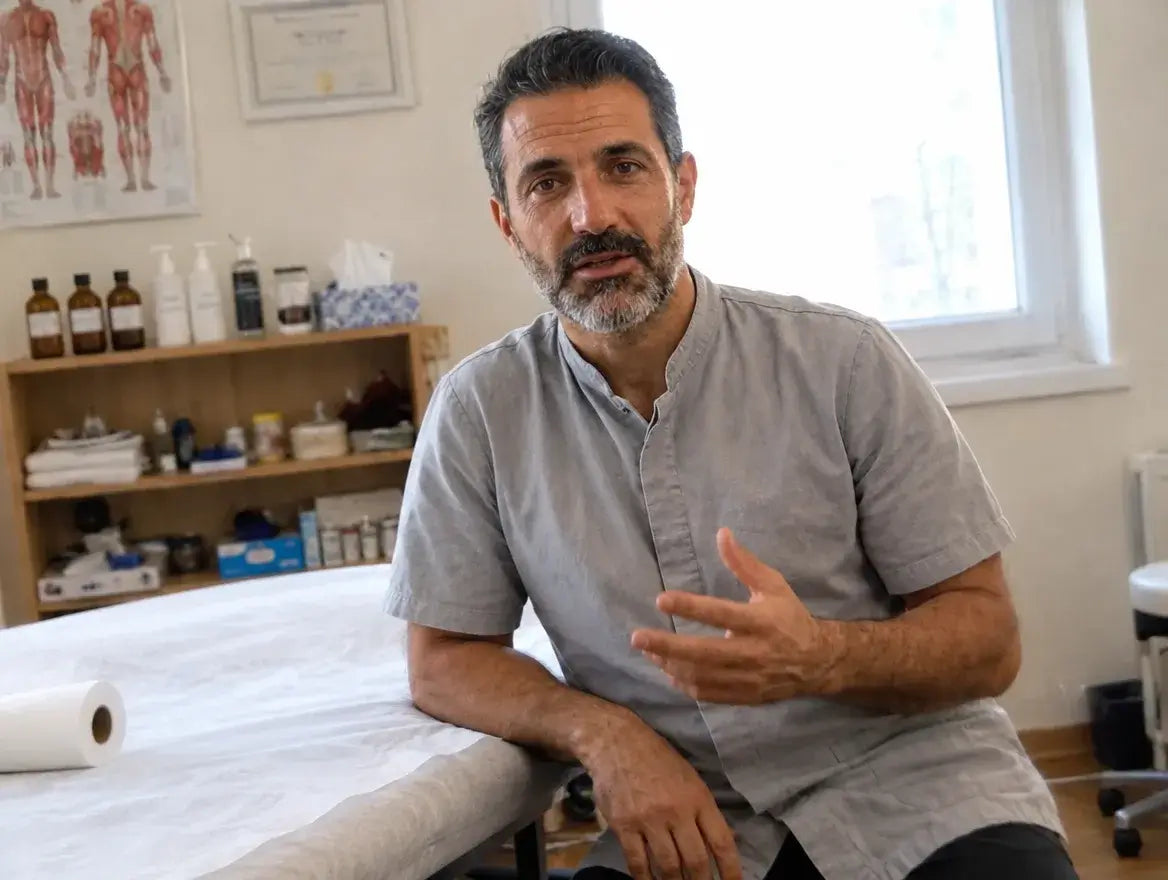
After 19 years working on legs for a living, I started getting the same question from clients almost every week: "what about the thing I saw on Instagram?"
They would bring the things in. A wood therapy kit from TikTok. The steel roller from Amazon. A cupping set. A plastic fascia tool, and the bruises to go with it. And they would ask me, as a professional, whether it was worth the money or whether they should just book another session with me.
I'll be honest about the awkward part. The clinic I used to work at charged $120 to $160 a session for cellulite treatments. The machine did three things: it warmed the area, it applied suction to lift and work the skin, and a red light ran while it did. Three things. The rest of the price was the room, the therapist and the package.
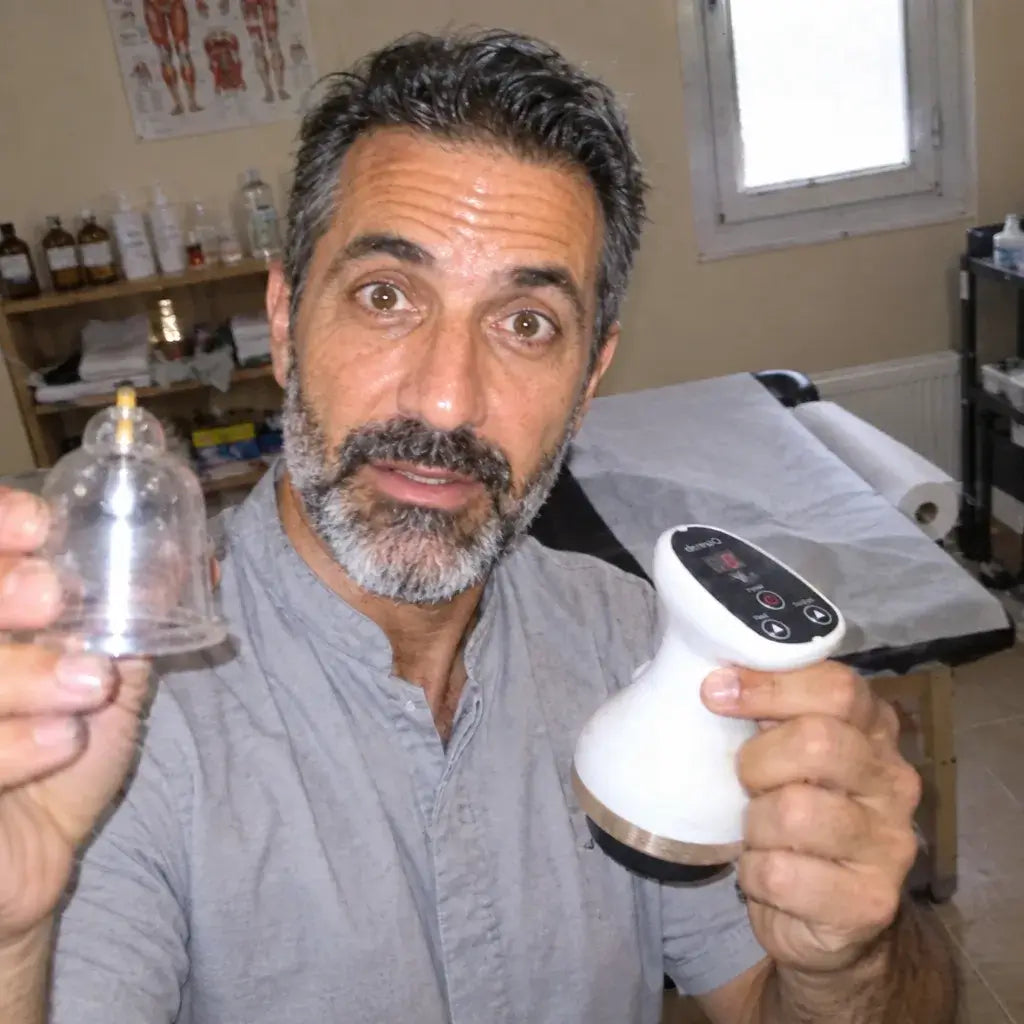
So instead of guessing, I spent 8 weeks testing the 5 things my clients actually buy for this, in the order they buy them, on myself first and then with 12 clients who agreed to use one at home three times a week and report back. Here is what we found.
Before the devices: the creams. All 12 clients had already been through at least two firming creams, the yellow jar everyone posts about, the blue Q10 one from the drugstore, the cocoa butter one. They feel lovely. But cellulite is the skin being pulled down in spots from underneath, and a cream stays on top of the skin. I did not need 8 weeks to test that; they had already done the test for me, in a drawer.
What I Was Actually Looking For
Cellulite is the skin being pulled down in spots from underneath. Creams sit on top of it. Muscle sits under it. The only approach that reaches the layer in between from the outside is working the skin itself, and a clinic machine does that with warmth, controlled suction and movement. So every device got the same five questions: does it warm the skin first, is the suction controllable, can an untrained person use it without bruising, will anyone still be using it after 4 weeks, and what does a session cost once you own it.
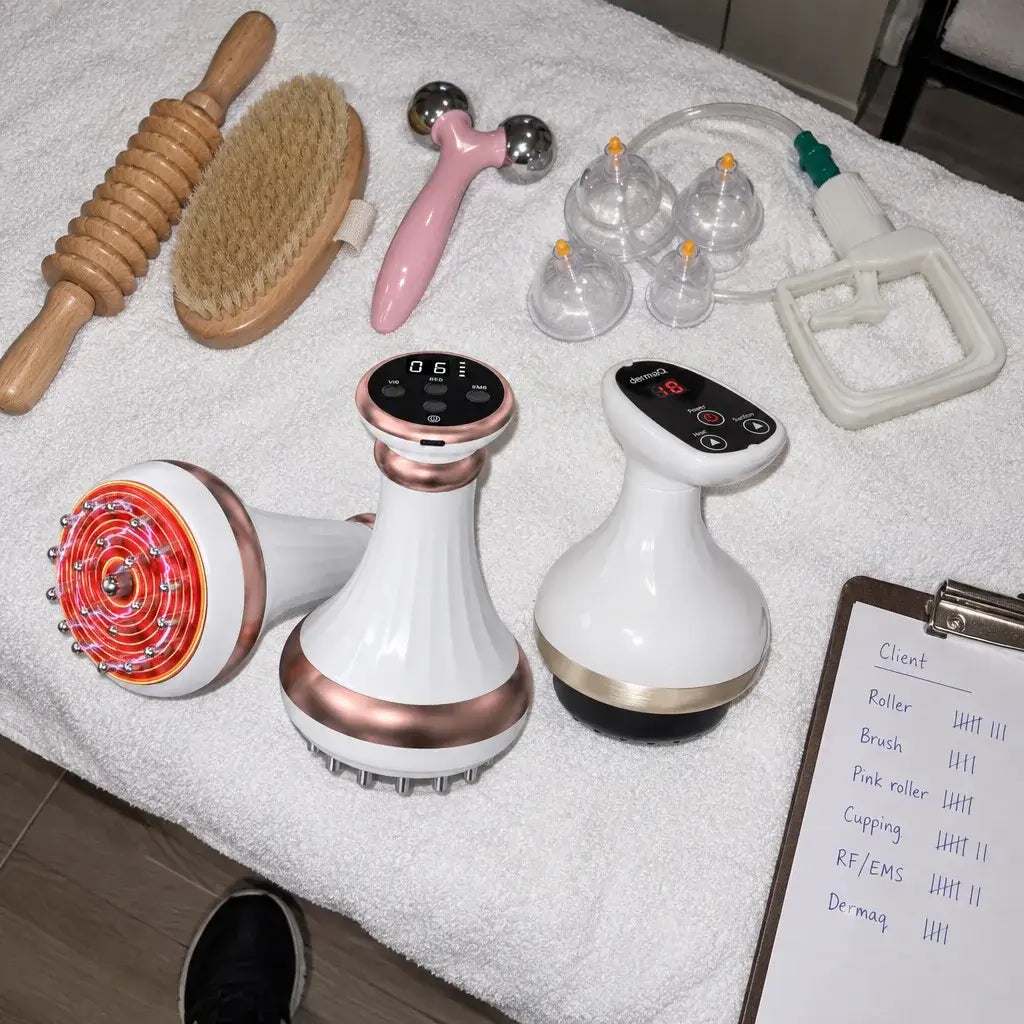
1Wood therapy kit and dry brush ($10 to $16)

- The TikTok one. Surface stimulation, which is real, for about an hour
- No warmth, no suction, nothing reaches under the skin
- 12 of 12 had already tried one before the test; 1 of 12 still using it at week 4
Verdict: Exfoliation with a trend attached. Pleasant, and over by lunch.
2"Lymphatic drainage" steel roller ($10 to $30)
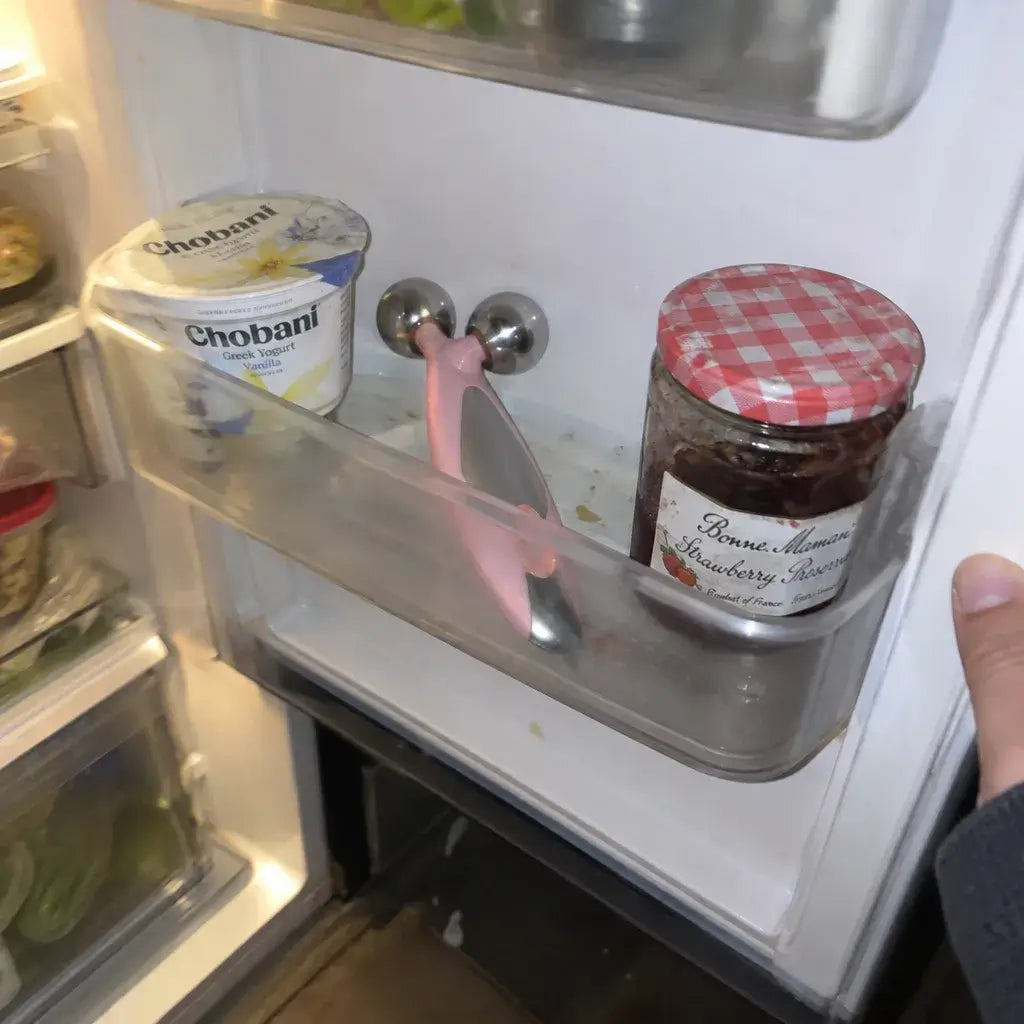
- The best selling cellulite tool on Amazon, by volume
- Cold steel rollers feel great and move fluid for a few hours
- 0 of 12 saw a change in the look of the skin at week 4; 3 of 12 kept it, for puffy mornings
Verdict: A nice de-puffing tool sold with the word cellulite on the box. It works the floor above the problem.
3Manual cupping set with pump ($14 to $25)
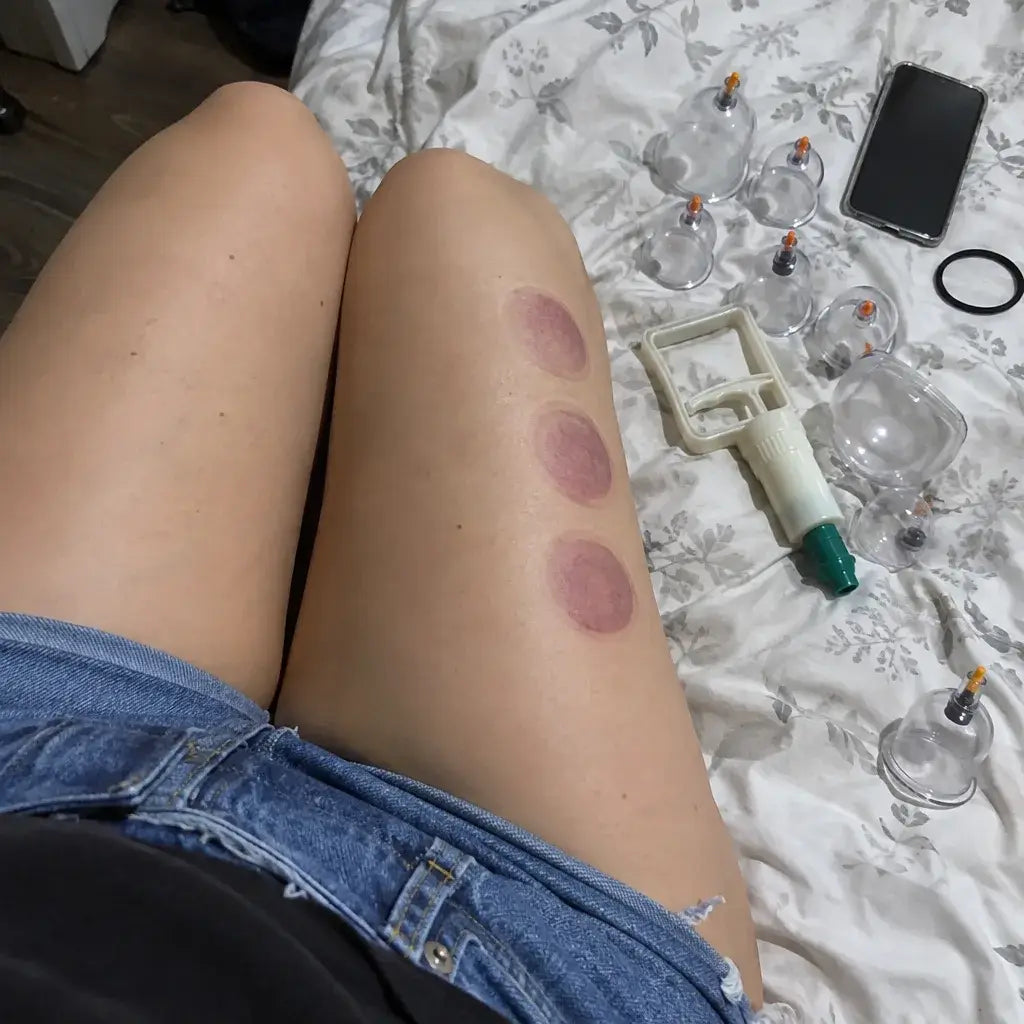
- The right principle: suction that lifts and works the skin
- No warmth and no control: the pump either grips hard or slips
- 7 of 12 bruised in the first week, 3 stopped because of it; 2 of 12 still using it at week 4
Verdict: The right idea with none of the control. The bruise is not a result, it is a sign the cup was pulled off wrong.
4The plastic fascia tool ($20 to $90)
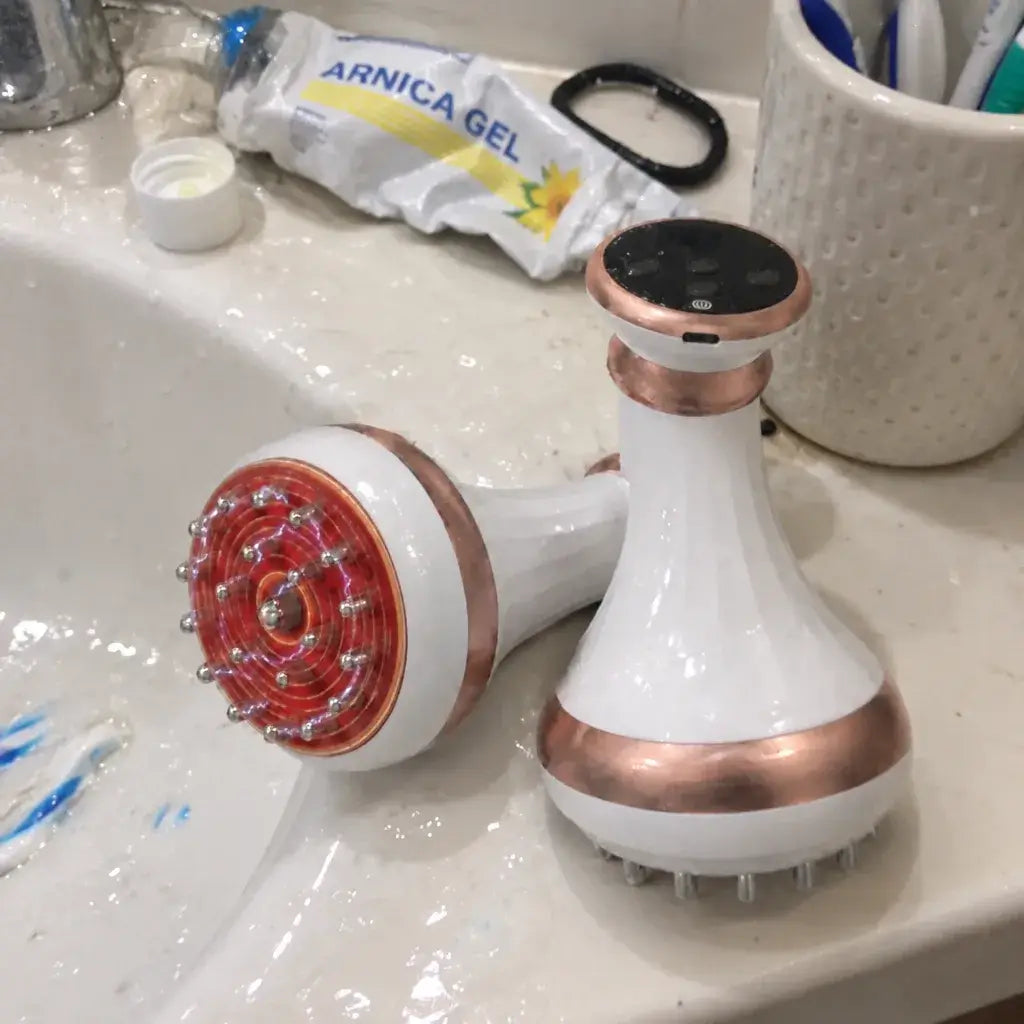
- A hard plastic tool with claws that you scrape over your legs, hard. The idea is to break things up with pressure.
- It hurts. The bruises are sold as part of the process.
- Most of the clients who tried it stopped in the first two weeks, because of the bruises, before they could tell whether it did anything.
Verdict: If a tool needs you to bruise to work, most women stop before it has the chance. The fifth one works the opposite way: gentle, on level 1, with a program built so you don't bruise. That's why people were still using it at week 4.
5dermaQ Sculpt 3 Pro ($59)
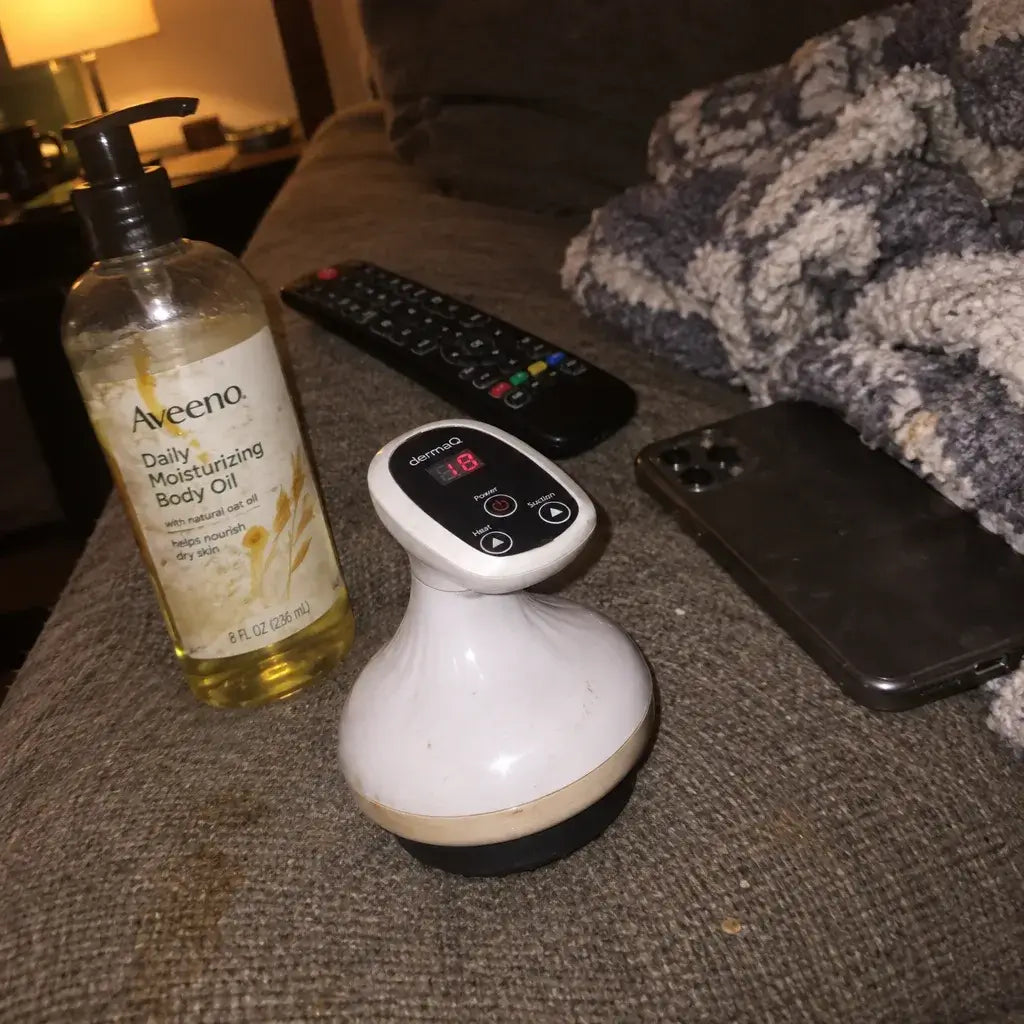
- Warmth, suction with 9 controlled levels, red light, in one handheld, USB charged, with oil
- The 90 day program says level 1 for the first two weeks. Everyone who followed that did not bruise. The one client who skipped to level 5 on day 2 did
- 9 of 12 still using it at week 4; 8 of 12 said the look of the skin was softer and more even by week 4, "softer, not gone"; 100 days to send it back
Verdict: The same three things as the $120 session, in a form people actually keep using. That is the whole result.
The Simple Truth
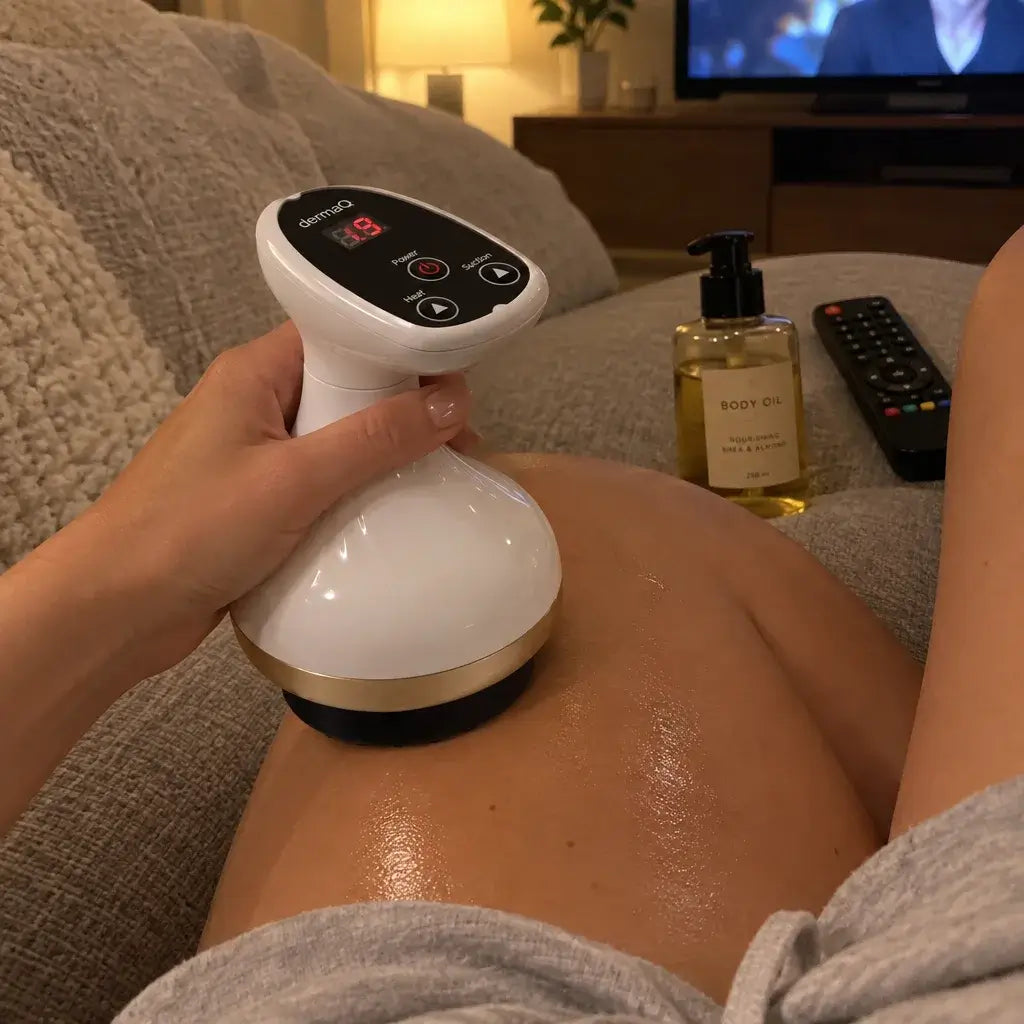
Whether it is the clinic machine or the $59 one, the mechanism is the same: warm the skin, work it with controlled suction, keep it moving. The clinic charges for the hands and the room. What actually produces a change over weeks is doing it three times a week, and the device people keep doing it with wins.
One client said it best: "It's the same thing I paid $120 for, except I own it and there's no Tuesday."
My Bottom Line
If you have been quoted a $900 package, try the $59 version first, for two weeks on level 1, with oil, ten minutes a leg. If after 100 days you don't see a difference in the look of the skin, send it back. That is less than one clinic session to find out.
If you've seen cheaper look-alikes online, they're probably the same idea. What they don't come with is the program that tells you to stay on level 1 for two weeks, and 100 days to decide.
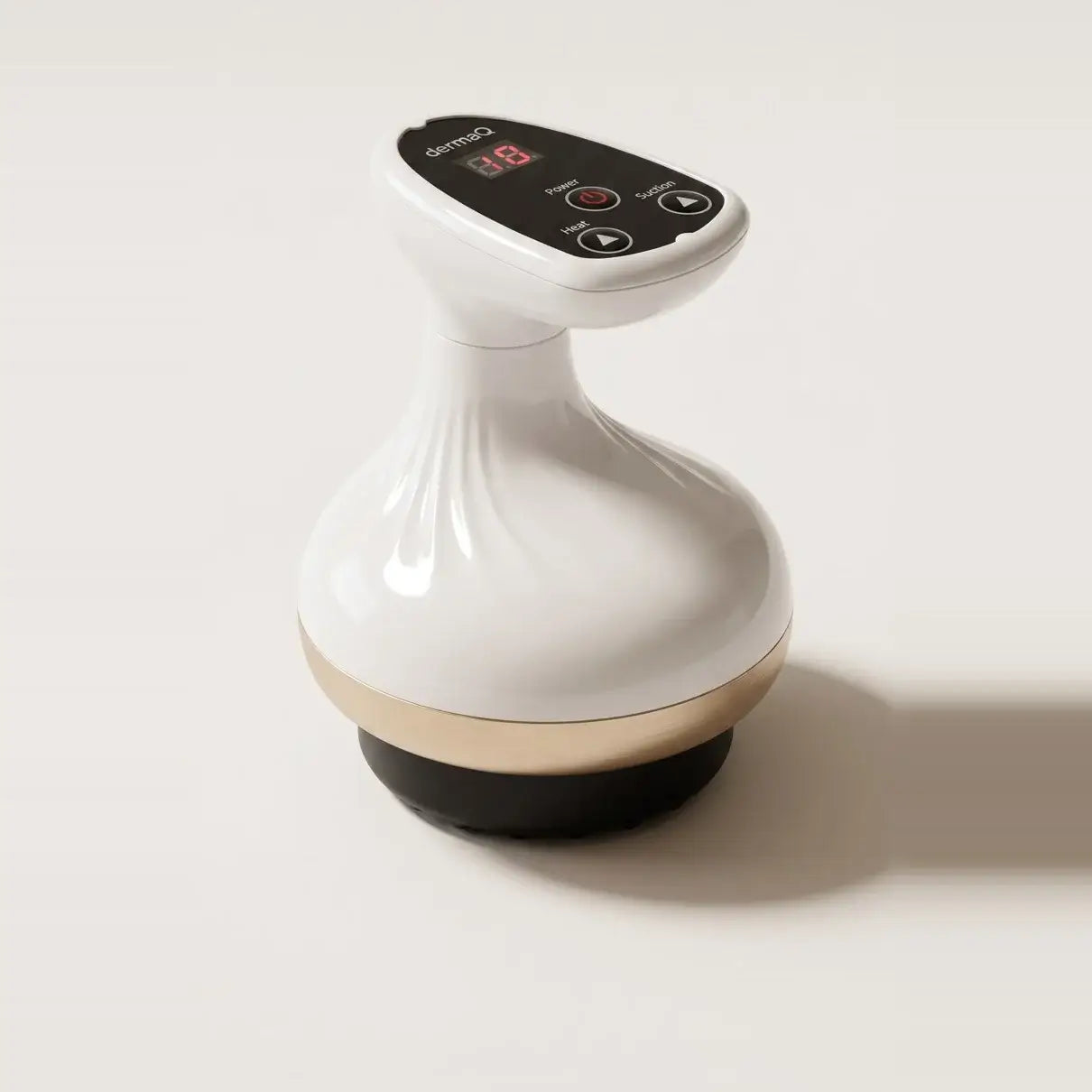
Try the dermaQ Sculpt 3 Pro Risk-Free for 100 Days
The device 9 of 12 testers were still using at week 4. $59 instead of $118, free tracked shipping, the 90-day program included. If you don't see a difference within 100 days, return it, no questions, no forms.
See Today's Discount ➜"What Readers Are Saying"
My sister sent me this after I told her about my $960 package. Wish I'd read it in February.
Three sessions left on a package I'm not going back for. This article is basically my life. The level 1 thing is real, don't skip it.
Marco has worked in bodywork and manual therapy for 19 years, including six in a clinic that sold body contouring packages. He tests the devices his clients bring in so they don't have to guess.
Finally someone who explains why the cupping set bruised me. Ordered the dermaQ one on level 1 like he says. Week 3 and no bruises, legs feel different in the shower.